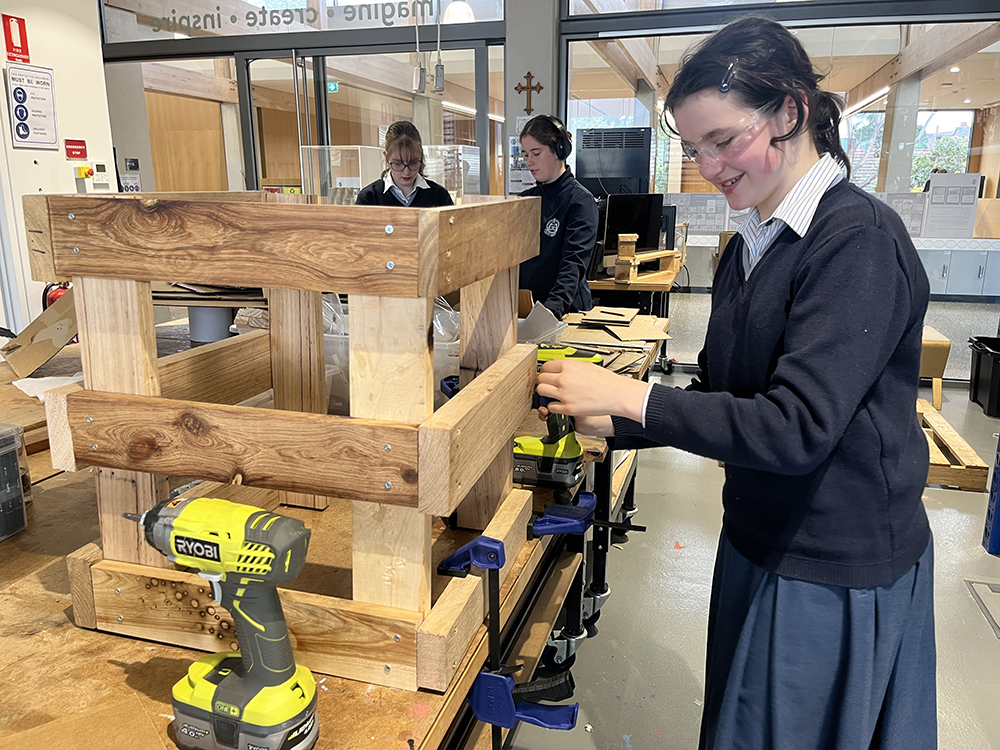
It has been a massive term of hands-on learning for our STEAM and Design Futures Lab students. Here is a look at what our students have been up to:
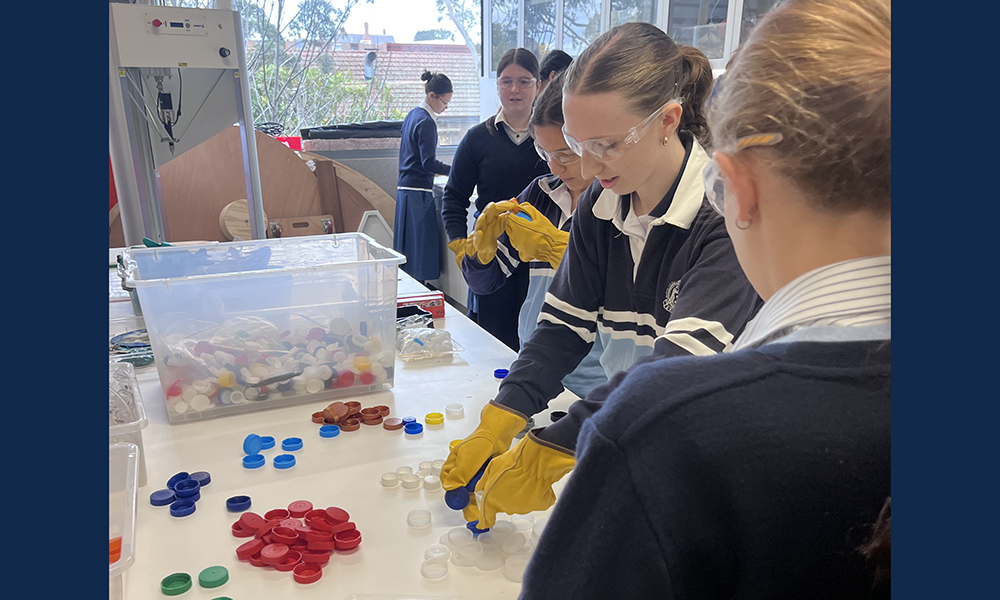
Two Year 11 Chemistry classes recently participated in a hands-on workshop in the Materials Lab, exploring the chemical and physical properties of different plastic types and examining their real-world applications. Designed to connect fundamental chemistry concepts with modern sustainability challenges, the session allowed students to investigate opportunities for recycling and material recovery within circular systems. By applying their understanding of polymer chemistry and material properties, students gained valuable insight into how scientific knowledge and material innovation directly contribute to more sustainable manufacturing practices.
Final-year Architecture student Anna Catherine recently visited our Year 11 Chemistry students to share her inspiring regenerative architecture thesis project. Her design completely eliminates plastics, opting instead for natural materials sourced entirely from the building site to show how architecture can coexist in harmony with fragile ecosystems and local ecologies. During the session, students explored the environmental impacts of plastic waste, innovative building applications, bio-based alternatives, and green chemistry principles, alongside hearing about Anna's personal architecture journey and material research process. By bridging chemistry, material science, and design, the event exposed students to emerging approaches in sustainability and offered them valuable insight into future pathways in architectural innovation and regenerative design.
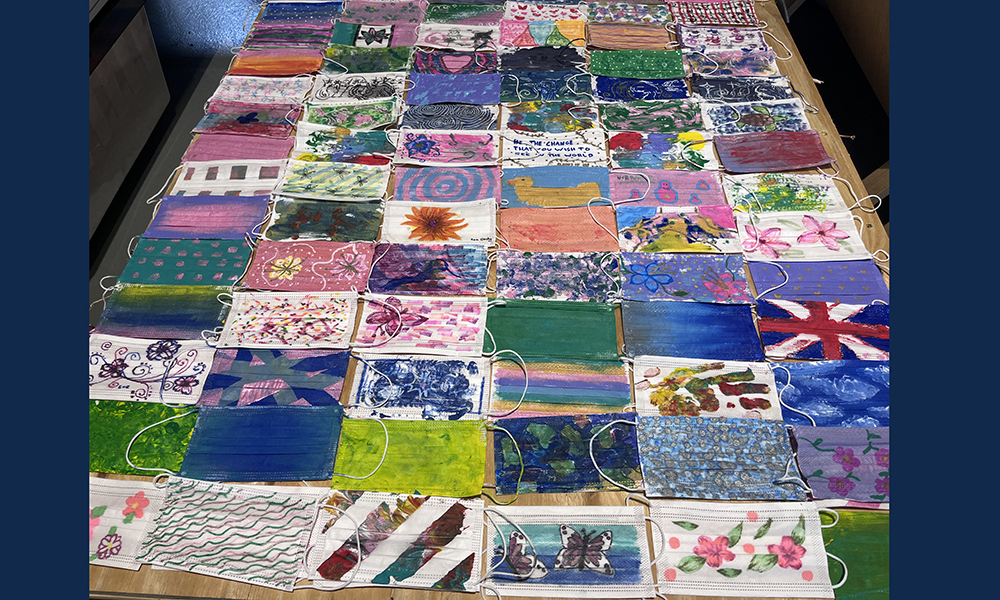
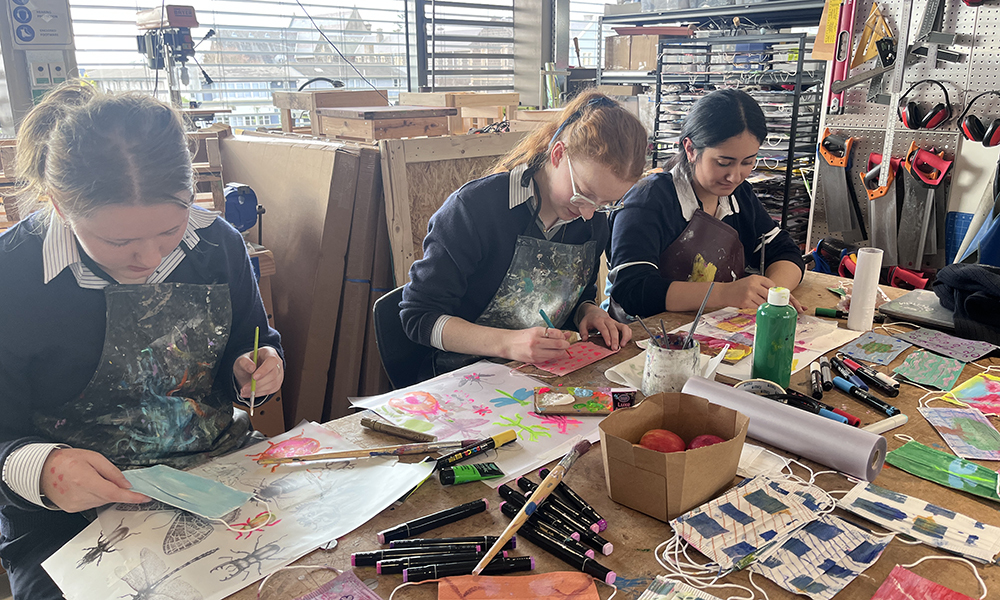
Students across the school have commenced an Open Lab Sessions collaborative upcycling project, which will be proudly exhibited at Geelong Design Week this coming October. More than 12 classes and hundreds of students have already participated this week, transforming new but expired face masks that would have otherwise been discarded into unique, individual artworks through sewing, drawing, and painting. Together, these individual pieces are contributing to a large-scale, shared textile installation inspired by a tapestry or parachute. By engaging in this creative endeavour, students are exploring the principles of circular design, material innovation, and creative collaboration, beautifully demonstrating how obsolete products can be reimagined and given new life. Looking ahead, the finished artwork will enjoy an extended story of regeneration, as it is transformed into bags, garments, and other products following the exhibition.
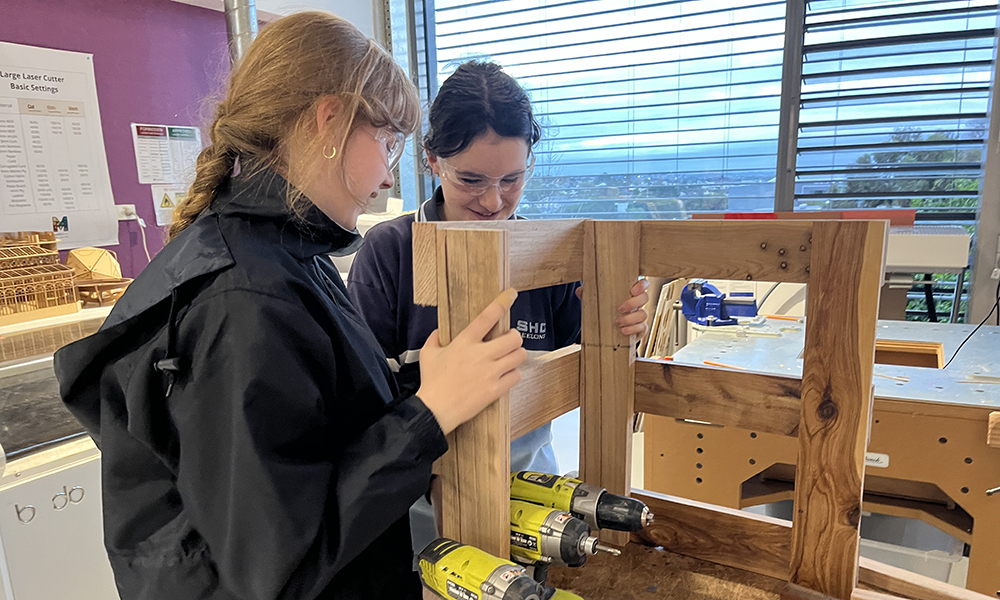
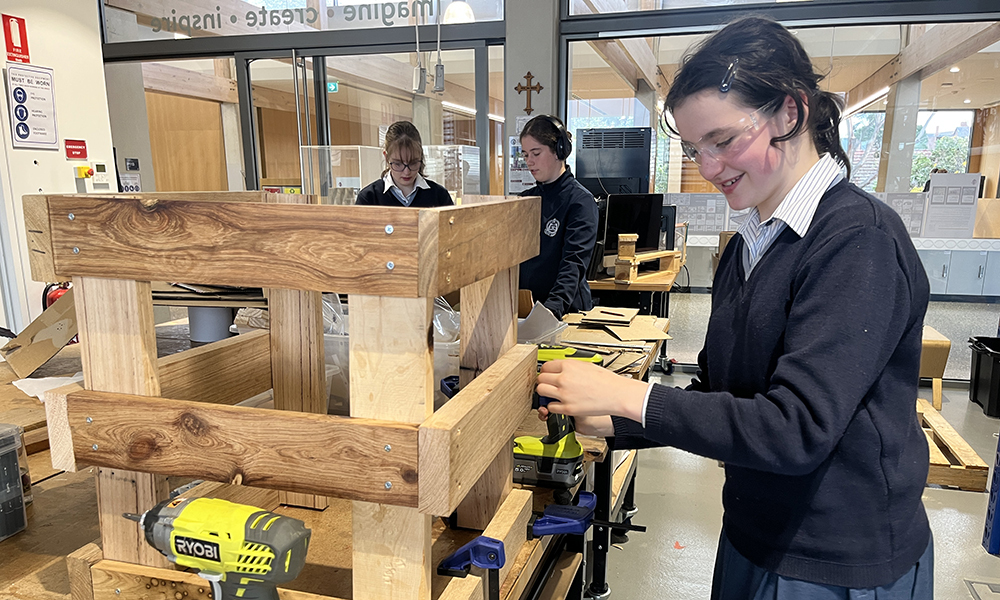
During their Wednesday Design Futures Lab sessions, students continued their ongoing Tiny House project by constructing and testing a prototype stair framing system, while simultaneously fabricating custom display stands for the upcoming Geelong Design Week exhibition. This hands-on build allowed students to tackle real-world design challenges, build practical construction confidence, and gain authentic experience with professional tools and fabrication techniques. Through this collaborative effort, they actively explored structural design, measurement, and problem-solving. Looking to the future, the stair prototype will directly inform the final architectural design of the Tiny House, while the completed display stands will serve to showcase student work and material innovations at the public exhibition.
In their Thursday Design Futures Lab sessions, students continued their exploration of emerging regenerative alternatives in the New Materials Lab. Through hands-on experimentation, they worked with a versatile paper-pulp ceramic material - which can be cast, pigmented, or adapted for 3D printing applications - while also cultivating and monitoring live moss samples to investigate grown materials for future textiles, interiors, and the built environment. This immersive session allowed students to merge material science with sustainable design, deepening their understanding of material properties, fabrication techniques, and biological growth systems. Looking ahead, these innovative material samples and moss studies will fuel ongoing lab research, paving the way for future prototypes and installations at Geelong Design Week.