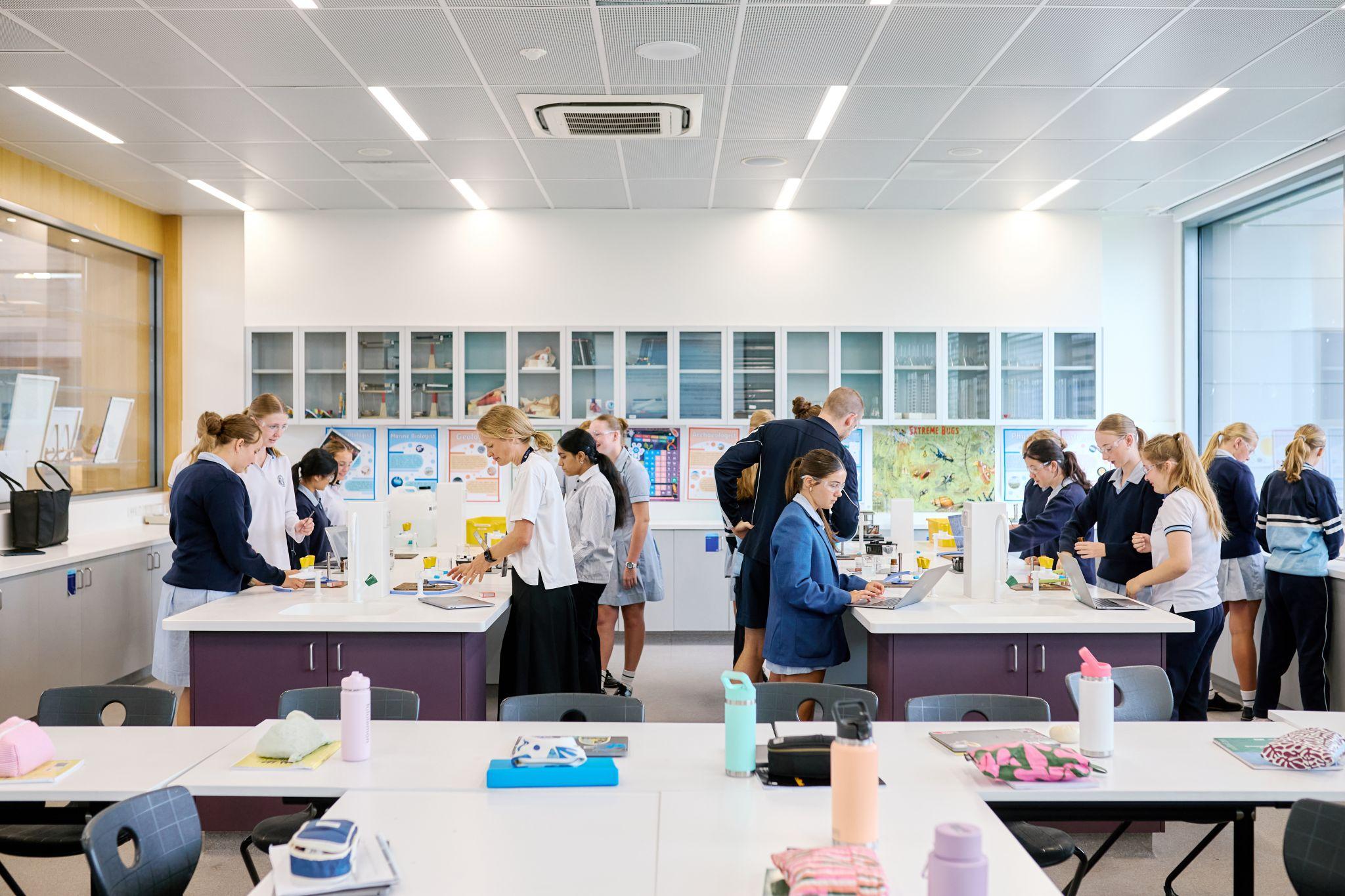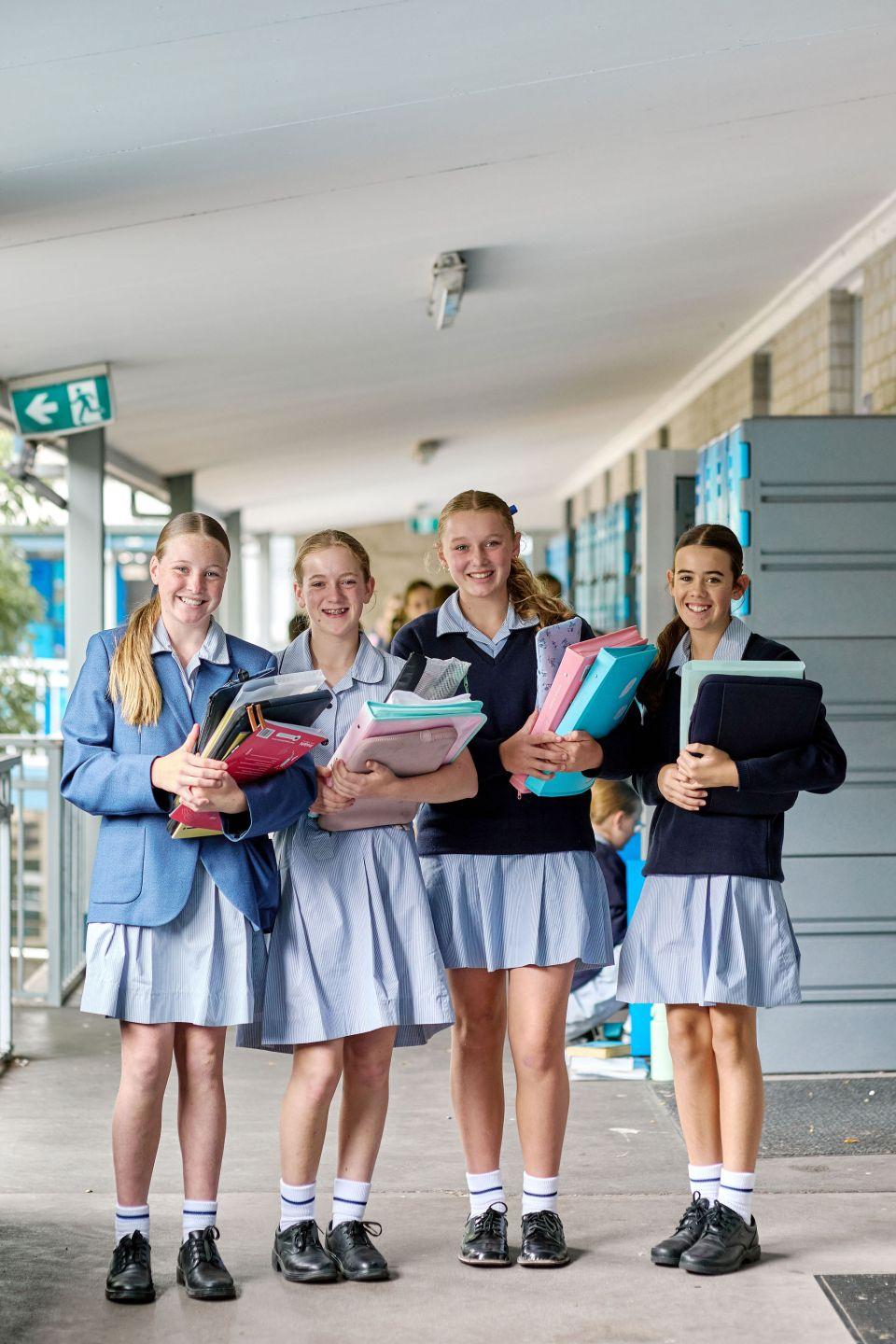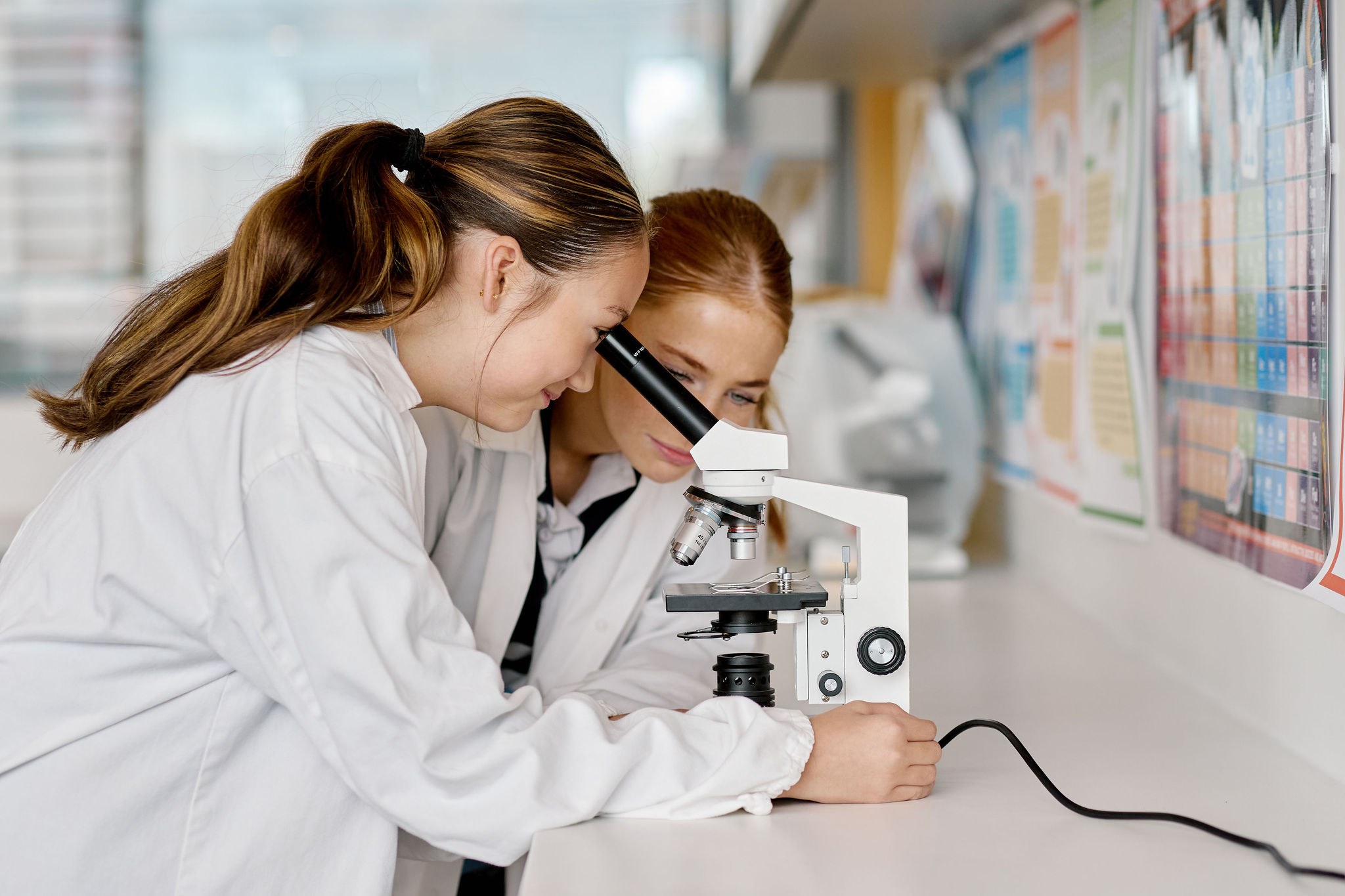
Our Mercy tradition of education was born out of Catherine McAuley’s quest to address injustice and to empower young women by seeking an educational system that best reflected the signs of the times. By fostering agency and self-ownership, we empower our students to tackle real-world challenges with innovation and courage. This foundation ensures that every Sacred Heart graduate emerges as a compassionate, forward-thinking individual, equipped with both academic excellence and the integrity to lead a life of purpose.
We focus on making a difference through education, blending our extensive Mercy tradition with a contemporary strategy designed to enhance student agency, wellbeing and real-world relevance. At Sacred Heart we honour each student’s potential through innovative and best practice teaching and learning. This student-centred approach welcomes active, responsible participation by creating personalised learning pathways based on learner readiness.
The unique dignity of each student is embraced within a safe, inclusive and collaborative environment. We encourage our students to be self-motivated, adaptable learners who are prepared for life beyond school. Informed by well-researched frameworks, our College designs and delivers learning that is accessible, engaging and purposeful – using data and reflective practice to ensure continuous growth.
By leveraging technology and inspiring curiosity both within and beyond the classroom, we prepare our students to graduate as resilient global citizens. They leave Sacred Heart with a strong sense of self, a commitment to future-focused lifelong learning and the tools to make a meaningful impact on the world.
Sacred Heart honours the potential of each student through innovative, best-practice and student-centred teaching and learning.
Grounded in our Mercy values, we inspire an enduring passion for discovery in an environment that protects individual uniqueness and dignity. Our classrooms are safe, inclusive spaces designed around collaboration, authentic partnership and respectful relationships.
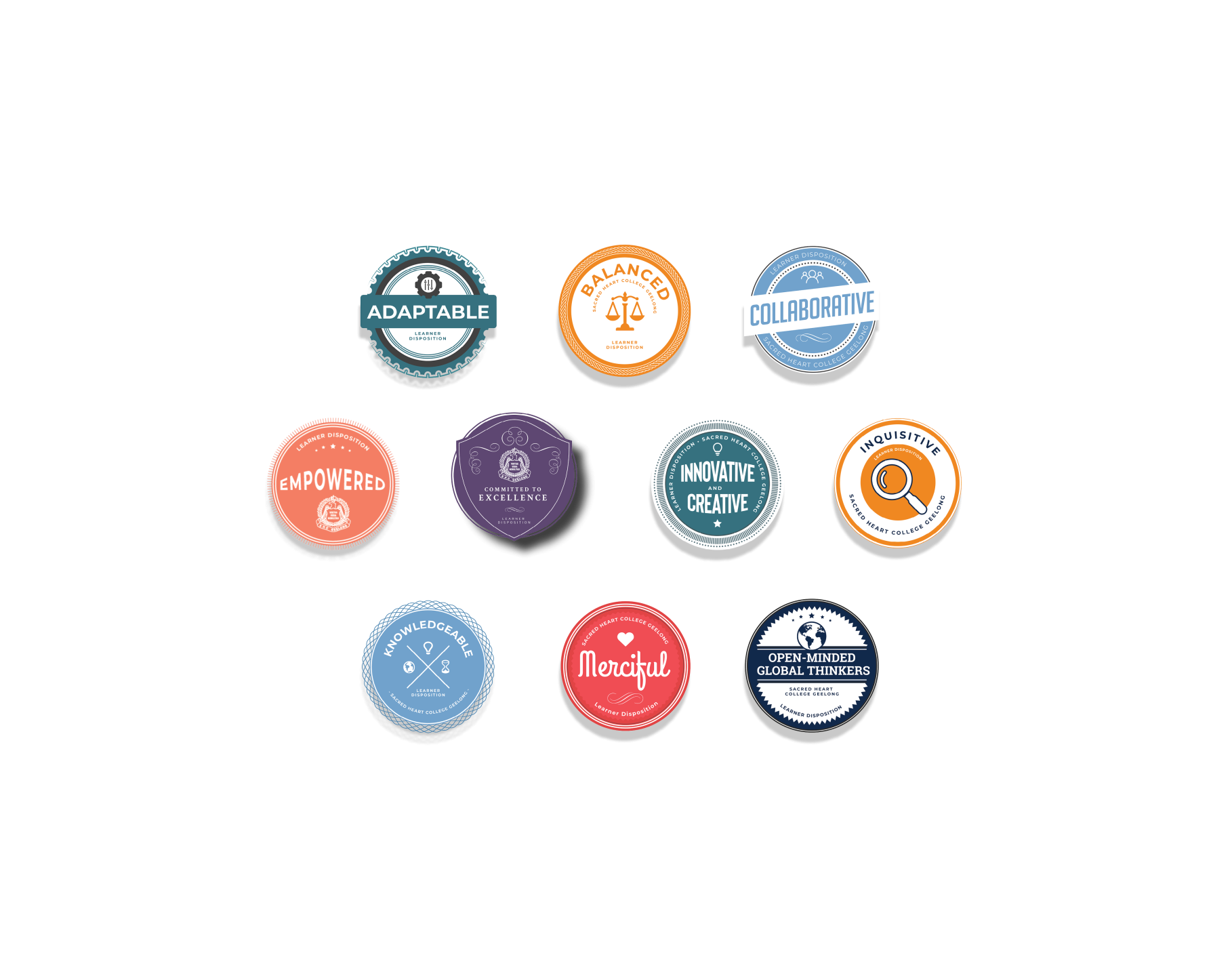
By fostering positive learner dispositions, our students become highly capable agents in their own education. They master the essential skills to self-motivate, manage their growth, adapt to challenges and monitor their own progress. Thereby establishing lifelong habits of success and leadership.
Our Pedagogical Model sits at the heart of our teaching and learning practice. This four-phase approach guides how we plan for clarity and alignment, build foundations for mastery, make learning visible and achievable and deepen metacognition through reflection.
At the core of our educational approach is a simple promise: we teach in strict alignment with our Learning Philosophy. We believe that true academic excellence is not static; it requires a dynamic, intentional and evolving framework. To honour this commitment, our faculty operates within a rigorous, consistent four-stage cycle designed to maximise student outcomes and keep our curriculum at the cutting edge.
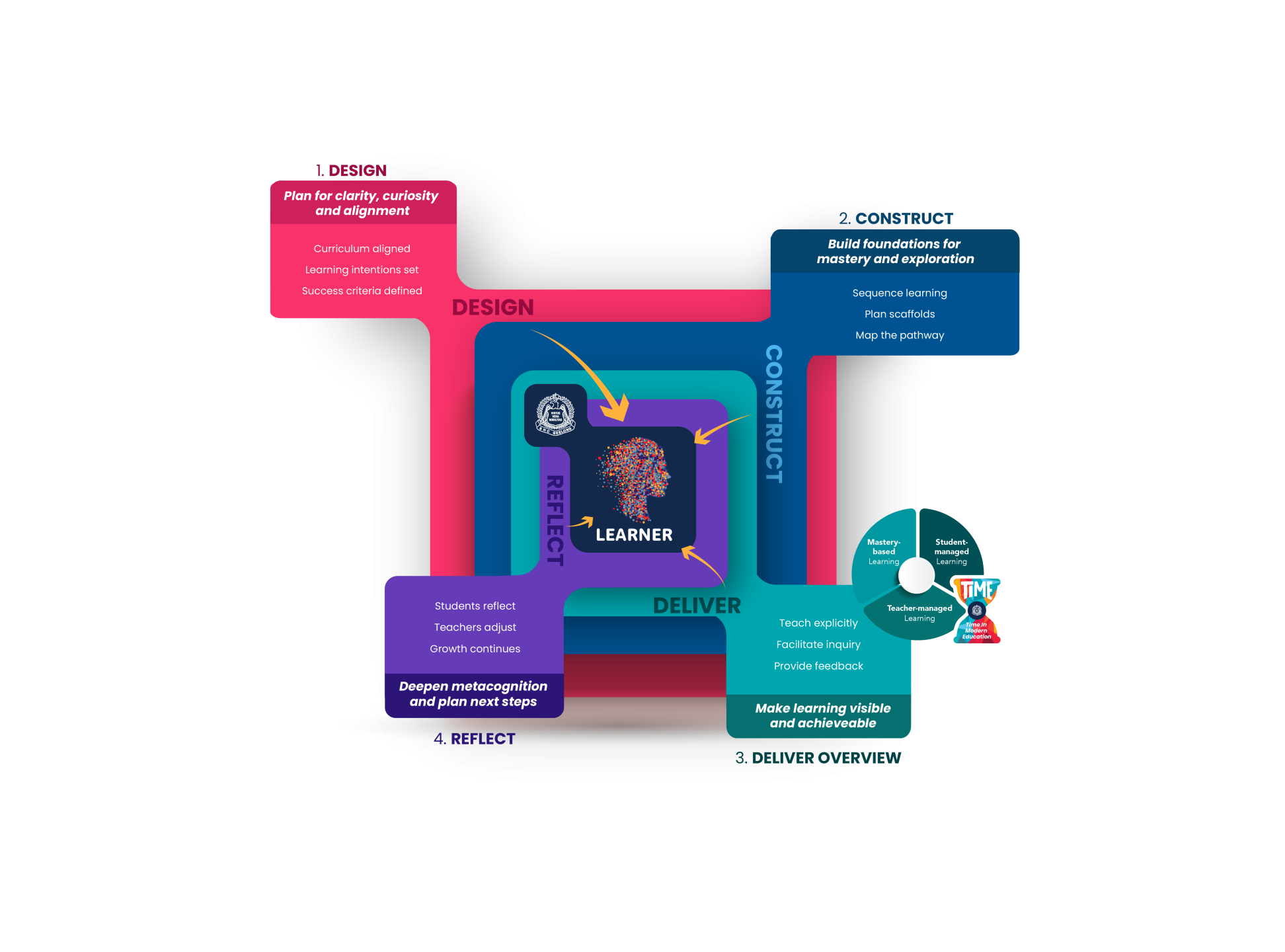
Throughout the design phase, teachers plan with the intent of clarity, building curiosity and alignment to the curriculum. This enables students to set their learning intentions early and successfully meet the criteria.
The second stage of our learning philosophy is where students build foundational skills for mastery and exploration. This is where students 'do'; they are hands-on in their learning, transforming theory into practice. Sequenced learning and scaffolded pathways build the sturdy knowledge structures students require for their later years of exploration and depth.
No student is left behind as teachers carefully plan, map the learning pathway and build the necessary scaffolds that each student requires.
The delivery phase is where learning becomes visible and achievable. Explicit teaching, inquiry facilitation and rich feedback help students grow beyond their capabilities.
Teachers combine direct instruction, guided inquiry and hands-on learning to flexibly respond to each individual's needs.
The final phase of our philosophy is reflection. Metacognitive reflection and learner agency represent the fullest expression of the flourishing learner.
Teachers and students engage in metacognitive reflection, analysing assessment evidence, celebrating growth and identifying next steps. This reflective practice fuels continuous improvement.
As a College we engage in clever and creative learning where students strive for excellence. The uniqueness and dignity of each student is recognised and embraced within a safe, inclusive, respectful environment; a place that reflects a culture of learning together through collaboration, partnership and life-giving relationships. Students are encouraged to be self-motivated, empowered and adaptable learners prepared for life beyond secondary school.
Informed by well-researched frameworks, we design, construct and deliver learning that is accessible, engaging and purposeful. The learning community commits to achieving the highest standards through reflective practice, using data, research and evidence to drive learning growth.
To enrich our Learning Framework Model, we draw on Tom Sherrington's Learning Rainforest metaphor. This framework, in partnership with our Pedagogical Model, conceptualises the complexity, depth and interconnectedness of effective teaching and learning, providing every student with the environment they need to grow from a small seedling, guided by teachers, into a confident, independent learner.
Just as a rainforest ecosystem thrives through deep roots, strong trunks and expansive canopy – our pedagogical model creates conditions for every student to prosper.
Our educational framework is built on three essential, interconnected components, each supporting and strengthening every student as they move from foundational knowledge to creative independence. We do not view learning as a series of isolated lessons, but as a continuous, upward trajectory. By seamlessly weaving these three pillars together, we provide the stability students need to take risks, the tools they need to grow and the freedom they need to innovate.
The roots are where students establish the conditions for learning. They engage in building positive relationships, predictable routines, supportive environments, and a coherent scope and curriculum, whilst starting to develop resilience, curiosity, collaboration and self-regulation dispositions.

The trunk is where teaching helps students build on and master their knowledge and skills, providing a foundation. Students receive effective instruction, responsive teaching, knowledge coherence, and support for memory development.
The canopy is where students have developed a strong foundation and are encouraged to branch out, using their acquired knowledge and skills to drive their own education. Students engage in hands-on experiences, student-led inquiry, oracy, discourse and real-world applications.
We are committed to equipping our students with the skills and knowledge necessary for success in today's world while also preparing them for the opportunities and challenges of the future.
The Time In Modern Education (TIME) Project represents a transformative shift in our educational philosophy. It moves away from traditional teaching methods and embraces a student-centred approach that prioritises individualised learning experiences. This model not only fosters personalisation and adaptability in the curriculum but also places a strong emphasis on the overall wellbeing of each student, acknowledging the importance of mental, emotional and social health in the learning process. By focusing on these elements, we aim to develop a nurturing environment that empowers students to thrive both academically and personally.
Our timetable utilises varied lesson durations – 30, 60 and 90 minutes. This varied timetable enables Wednesdays to be dedicated to self-directed learning, consolidation and community-focused programs such as internships and outreach.
At Sacred Heart we are actively fostering the essential skills of self-motivation, resilience and management.
Students are inspired to learn within and beyond the College, leveraging technology and recognising that education happens anywhere and anytime. This structure enhances preparedness for the future and provides a tailored academic experience.
Following a year of rigorous community consultation and continuous improvement, the TIME Project has become a benchmark in secondary education, drawing interest from schools across Australia and New Zealand looking to redefine their own learning landscapes.