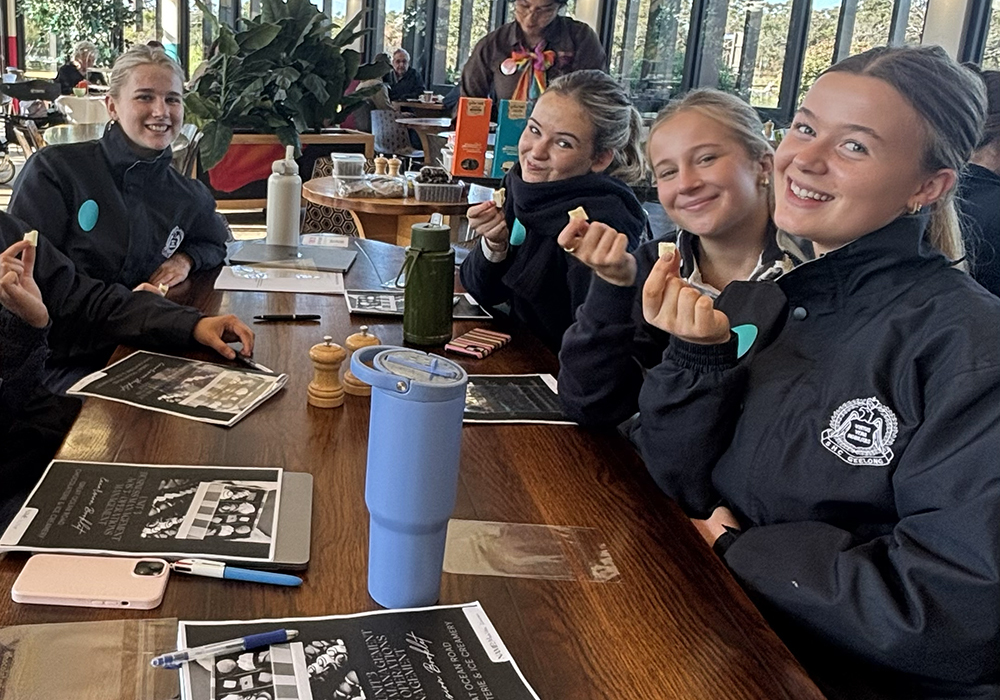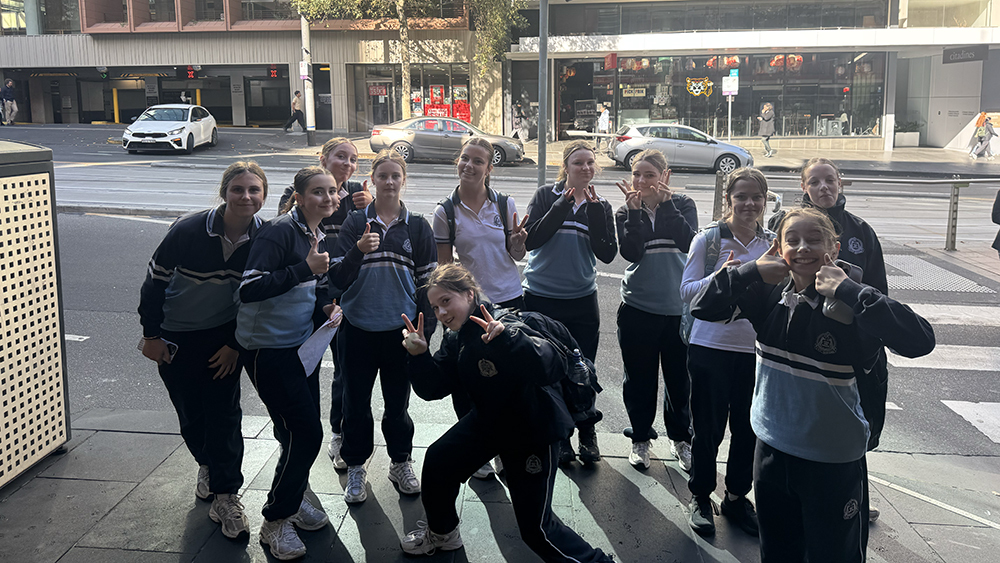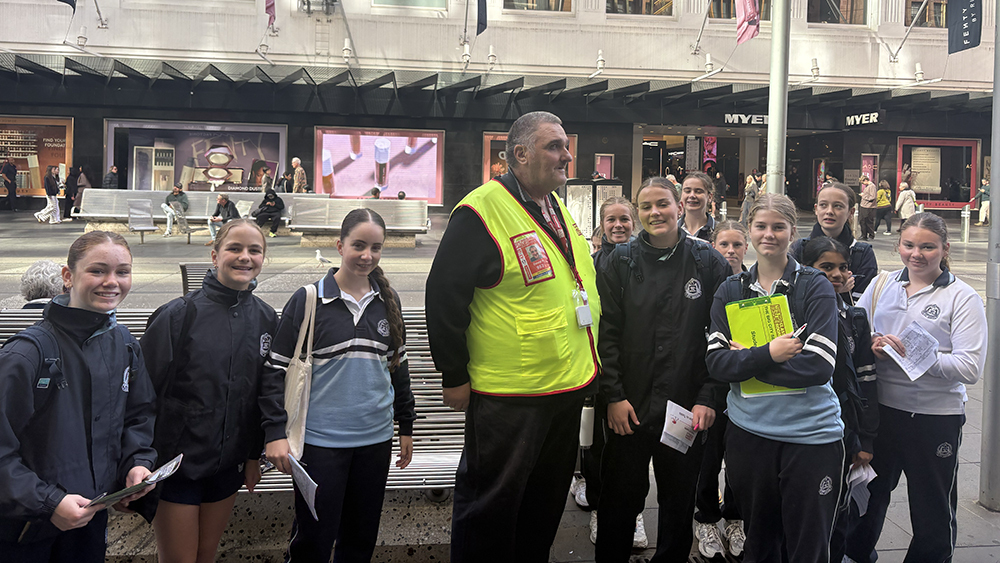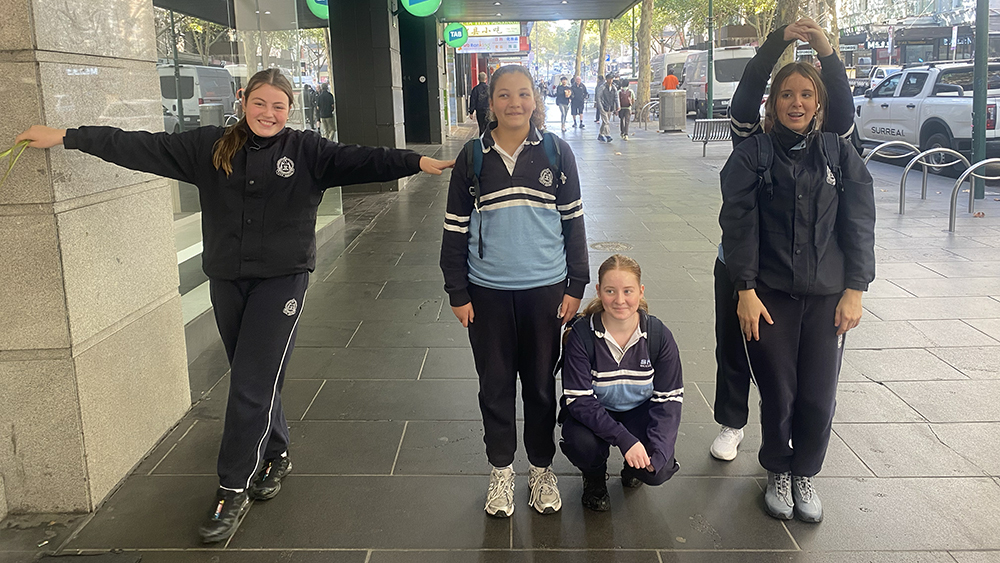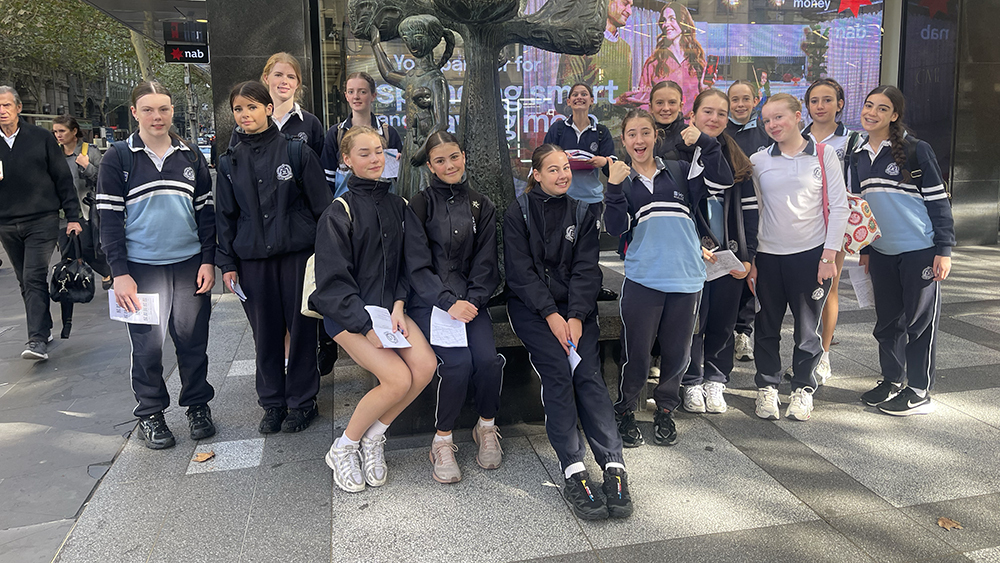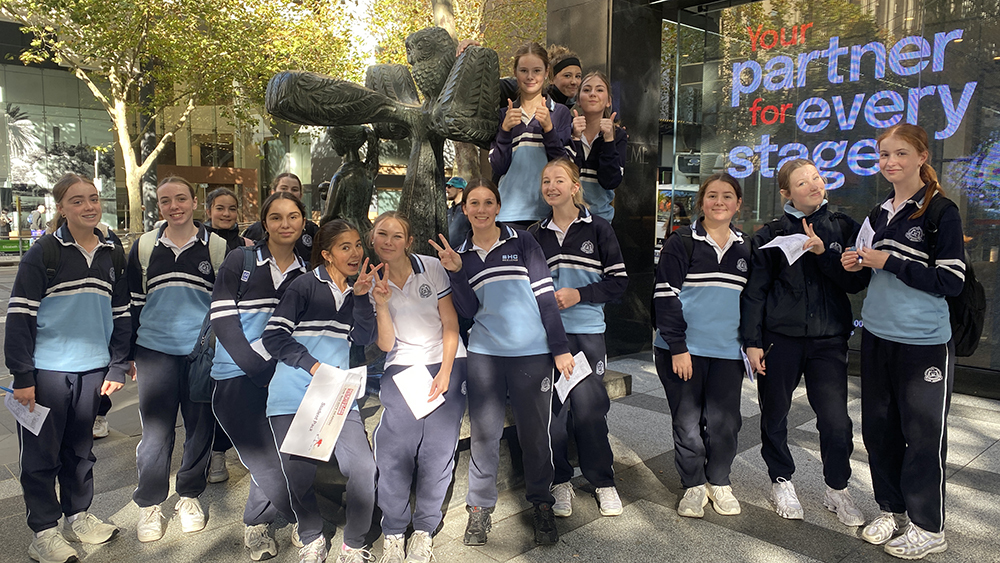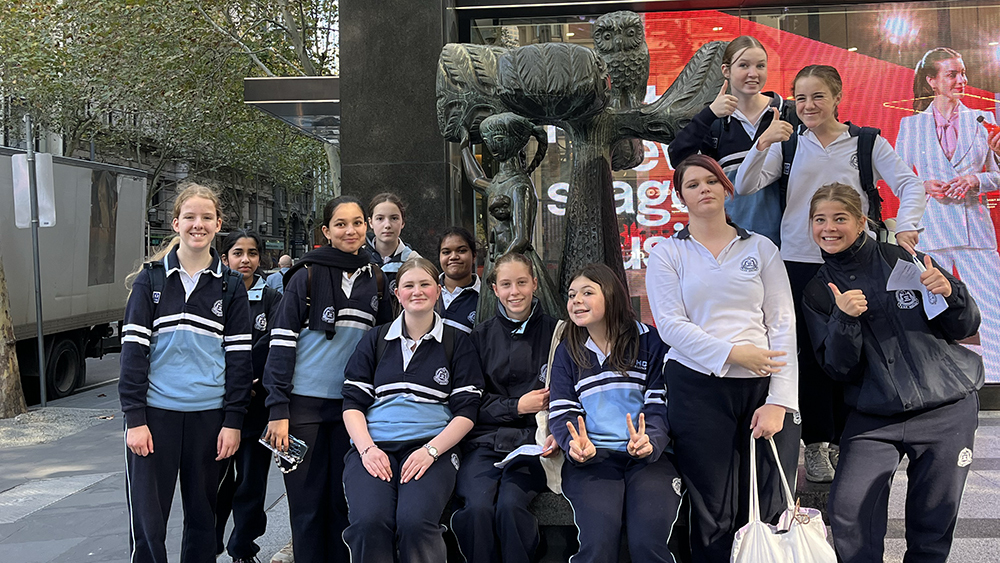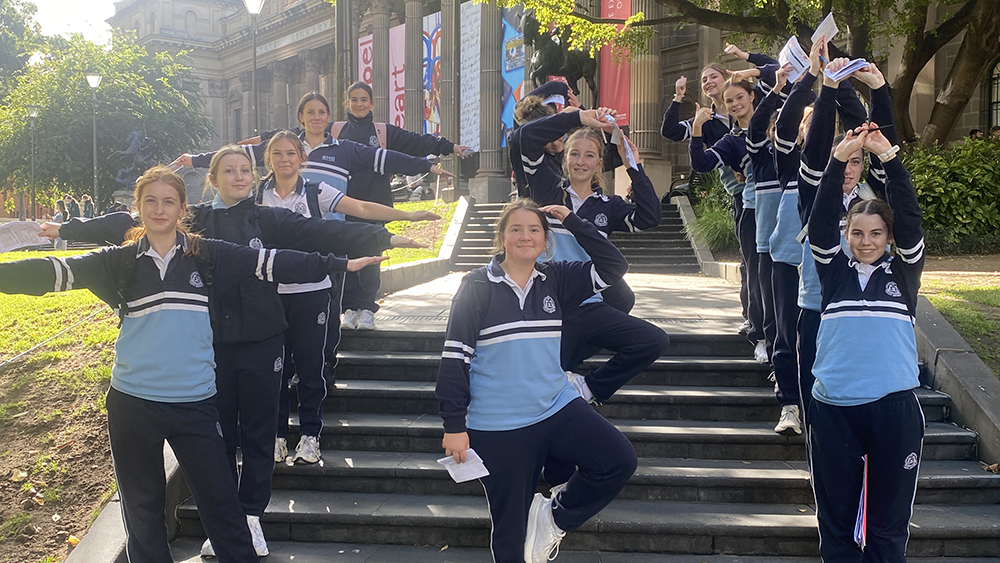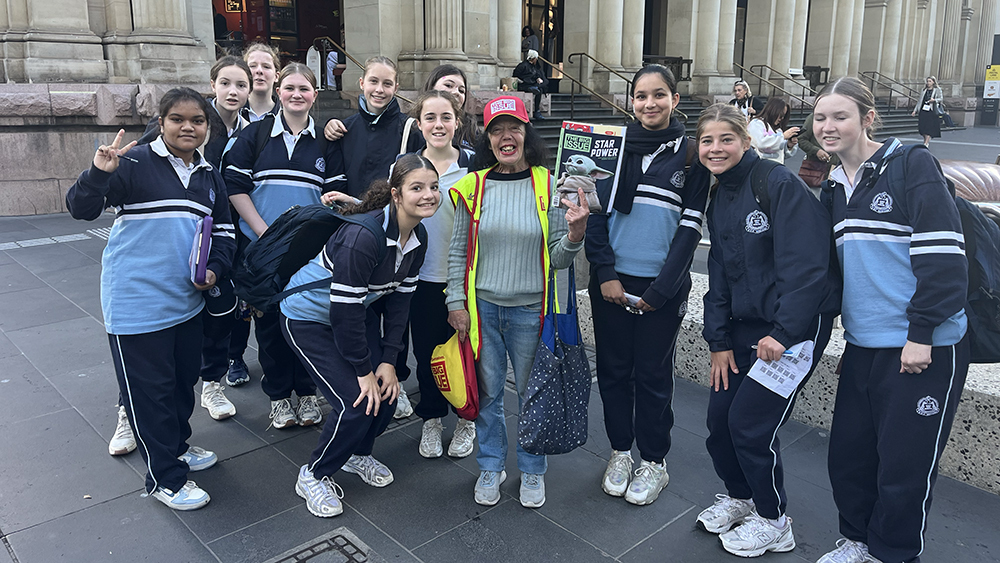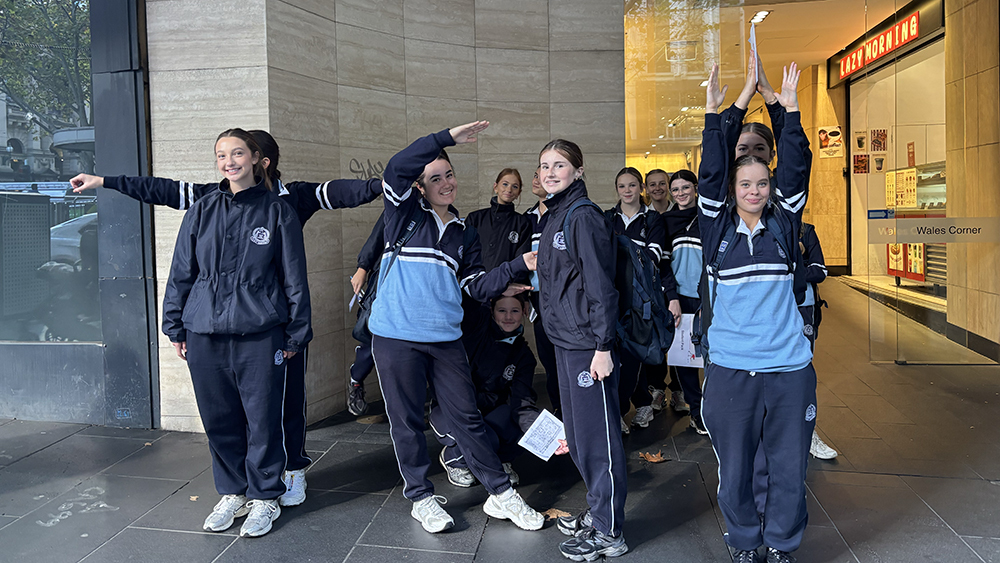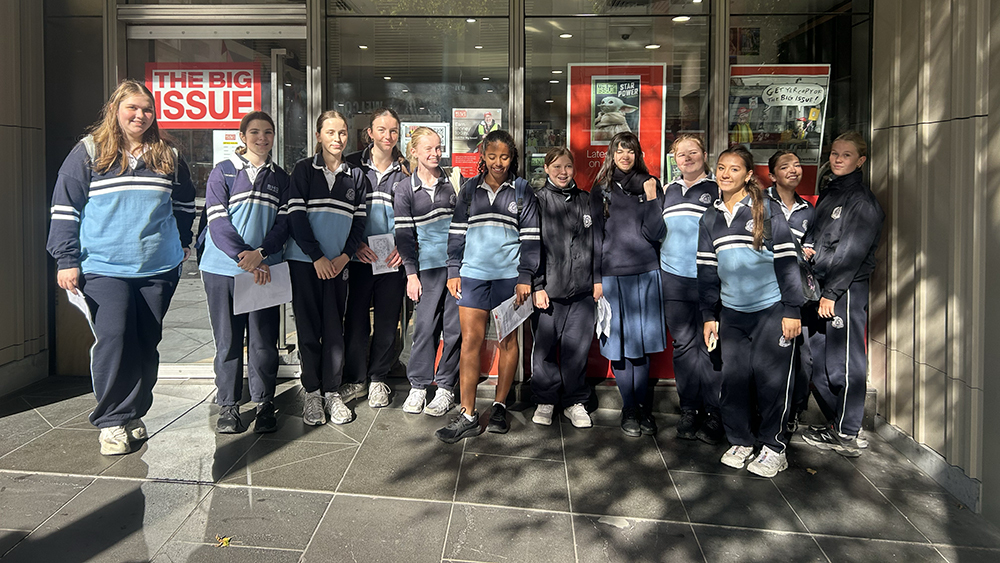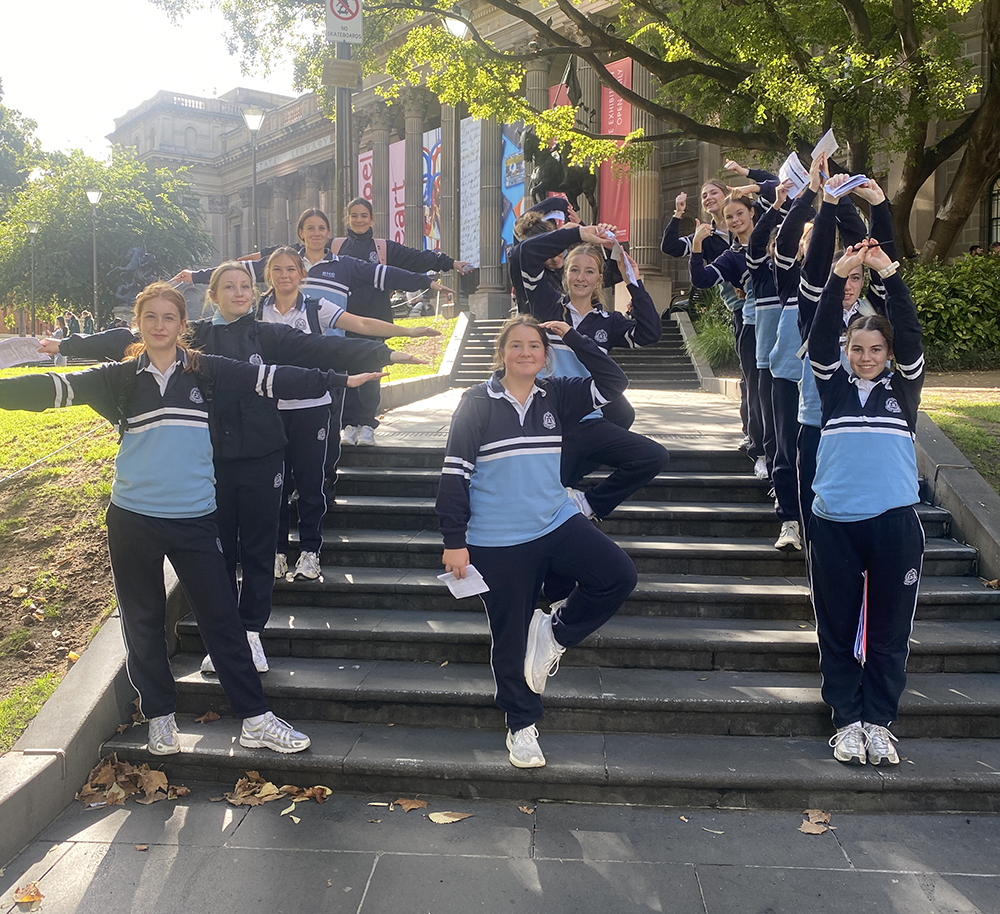
As part of their Transdisciplinary Unit (TDU), Year 8 students travelled to Melbourne to undertake a problem solving challenge. They were given detailed instructions and clues for this challenge, which they completed in small, collaborative groups. As they moved around the city, they explored complex issues relating to homelessness, confronting the real-world barriers associated with accessing public transport, essential social services, healthcare, and reliable income. This active exploration forced teams to think critically as they navigated the city in their groups, and transformed their initial academic curiosity into a visceral, lasting empathy, ensuring that their understanding of homelessness moved far beyond facts on a page and into a permanent, deeply felt sense of social responsibility.
In a traditional classroom, critical thinking often looks like analysing a case study with a single, neat answer. On the streets of Melbourne, the students quickly discovered that real-world problems are messy, unpredictable, and can at times be quite stressful. This hands-on experience successfully built on the theoretical content covered during classroom workshops in previous weeks. By physically retracing the steps required to secure basic needs without a traditional safety net, students gained a profound, empathetic insight into the genuine challenges faced by people experiencing homelessness and disadvantage. The city transformed for the students into a living classroom, allowing them to bridge the gap between classroom learning and human reality. The challenge left the students with a lasting understanding of systemic inequality and a deeply renewed sense of community awareness.